
Publication Laka-library:
The facts about nuclear energy (1983)
| Author | UKAEA |
| Date | July 1983 |
| Classification | 2.05.0.00/18 (UNITED KINGDOM - GENERAL) |
| Front | 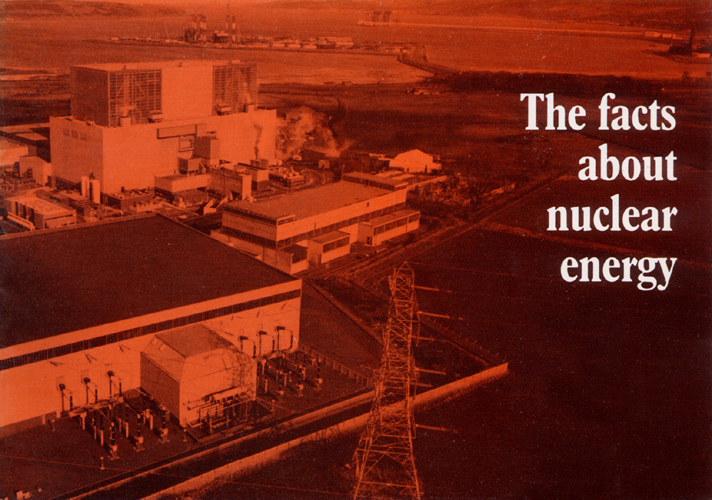 |
From the publication:
The need for nuclear energy

More than 2 5 years ago, Britain pioneered the technology of nuclear
energy. Today, fifteen nuclear power stations are producing about one-sixth of the
nation's electricity. Three more stations are coming 'on stream'. When these are in
full operation about one-fifth of our electricity will be nuclear based. Work on
another two stations is well advanced.

Our nuclear power stations have proved safe, clean, reliable and economical. The
electricity generating boards have shown that, taking into account the cost of
constructing the stations, of fuel reprocessing and waste disposal, and
decommissioning stations at the end of their useful lives, electricity generated by
nuclear power is comparable in cost to that generated by using coal and less than
that generated by using oil.

A recent international study* of generation costs has shown that new nuclear
generating plant has a clear competitive advantage over coal-fired plant for base
load generation in the UK, West Germany, France, Italy and Belgium.

We live in a world in which current standards of living are taken for granted in the
industrialised nations, while the hopes of achieving tolerable standards in the third
world depend largely on reliable, adequate and reasonably-priced sources of energy.
In recent years, about half the world's energy has come from oil, production of which
must begin to fall in the future because new discoveries are not keeping pace with
extraction.

Britain has large reserves of coal and about three-quarters of the country's
output is burned to generate electricity. However, coal will be needed increasingly
for many uses other than generating electricity. Coal could be employed more for
industrial steam production, be utilised as feedstock to make chemicals and
fertilizers, and possibly become a source of liquid fuel. Moreover, as natural gas
supplies are also likely to become scarce in time, coal will again be needed to make
gas.

Conserving energy by not wasting it is an obvious way in which we can stretch our
present resources of coal and oil. This means raising fuel efficiency in our factories,
improving fuel economy of motor vehicles, and insulating houses and offices to
prevent heat losses.

*The study was made by the International Union of Producers and Distributors of
Electrical Energy.
This publication is only available at Laka on paper, not as pdf.
You can borrow the publication or request a copy. When we're available, this is possible for a small fee.