
Publication Laka-library:
Energy or extinction? The case of nuclear power (1977)
| Author | F.Hoyle |
| Date | 1977 |
| Classification | 6.01.3.00/04 (NUCLEAR SAFETY - GENERAL) |
| Front | 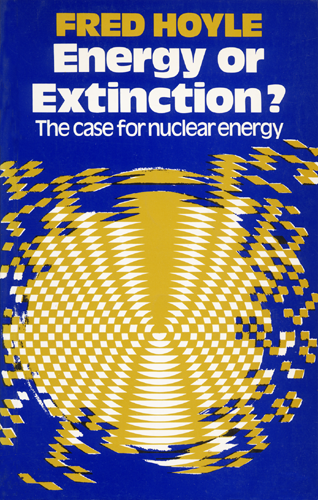 |
From the publication:
Without energy resources on a vast scale our present society cannot survive. We
must have continuing access to the fuels we need; yet the fuels we use are running
out at a time when world energy consumption is certain to rise further, even if
population stabilises, as the standard of living of the Third World rises towards
that of the West.

Estimates are that our energy requirements will stabilise at around 6.10 14 kWh per
year. Current reserves of oil and gas could supply this for a mere 10 years: reserves
of coal and lignite for only 80 years. We must rid ourselves of our current dependence
on hydrocarbon fuels, but how? Time is short; we need a solution now.

According to Fred Hoyle, the technology to tap solar energy, wind or wave power
on a large enough scale just does not exist. These sources will be incapable of
supplying our energy requirements for the forseeable future. He considers nuclear
fission to be the only source currently capable of supplying our needs. The technology
exists, it is safe, it is reliable and it need not use the infamous fast breeder reactor.
The CANDU reactor, breeding from a thorium/uranium mixture, can solve our problem,
at least until the technology required to tap the energy of fusion has been developed.

This polemic is the central theme of the book. But Sir Fred fills in the scientific
background necessary to appreciate his arguments in his usual lucid, direct style,
so that his book can act as an ideal introduction for those unfamiliar with the
energy debate.

This short important book is unashamedly provocative. It hints at sinister motives
behind the arguments of some factions in the environmental lobby. It should be
widely read by all concerned in this problem, which is central to the future of life
on this planet.
This publication is only available at Laka on paper, not as pdf.
You can borrow the publication or request a copy. When we're available, this is possible for a small fee.