|
Quite a lot happens on this website, althought it doesn't show directly on the English homepage. But we regularly extend our collection with publications on nuclear power,
we publish news and analyses on nuclear power in the Netherlands, we digitize (old and even ancient) information and we make
it avalaible onnline. Laka is working on a daily base to make its website an even beter tool for anybody who needs information on any aspect of nuclear power.
So please don't be disappointed if this English news section is not updated very often -we are focusing mainly on the Netherlands. But
nevertheless, there is a lot to find on this site.
Check for instance the Laka library-catalogue which includes about 8,000 books and reports. It is easy to search, start with the search tool
above these lines. Many of the publications in the documentation centre are meanwhile available online, and if not, please ask and
we see what we can do!
February 15, 2024
Despite "commitments", Urenco Almelo continues to enrich Russian uranium
 Nederlandse versieYesterday, the ANVS, the Dutch nuclear supervisor, authorized the
transport of up to six shipments of fissile enriched uranium from Russia
to Urenco in Almelo. This is remarkable because after the Russian
invasion, almost two years ago, the uranium-enriching state-owned
company in Almelo still claimed it was "very concerned" about developments
in Ukraine and therefore "stopped all contracts" with Russia.
Local newspaper Tubantia now reports that Urenco is enriching uranium
from Russia for "a French nuclear power plant operator." It would,
according to a Urenco spokesperson, be a breach of contract not to do so.
Nederlandse versieYesterday, the ANVS, the Dutch nuclear supervisor, authorized the
transport of up to six shipments of fissile enriched uranium from Russia
to Urenco in Almelo. This is remarkable because after the Russian
invasion, almost two years ago, the uranium-enriching state-owned
company in Almelo still claimed it was "very concerned" about developments
in Ukraine and therefore "stopped all contracts" with Russia.
Local newspaper Tubantia now reports that Urenco is enriching uranium
from Russia for "a French nuclear power plant operator." It would,
according to a Urenco spokesperson, be a breach of contract not to do so.
Read more
December 1, 2022
Advertising Code Committee: Borssele nuclear power plant misleads about 'recycling' nuclear waste
Operator EPZ says it does not know where 60% of spent fuel goes
Nederlandse versie

EPZ, the operator of the Borssele nuclear power plant, has long claimed that they recycle "95 percent" of their nuclear fuel,
and that only "5 percent" remains as nuclear waste. Following a complaint by Laka, the Board of Appeals of the Dutch Advertising Code
Commission, ruled yesterday that these are misleading environmental advertisement claims. In its ruling, the board blames EPZ all the
more because theses misleading claims appear on EPZ's website under the header "Environment & Health", where "unsuspecting
visitors should expect accurate and balanced information about nuclear fuel and nuclear waste.
Read more
september 7, 2022
Next week: Russian uranium transport from Rotterdam to Germany
 Nederlandse versie
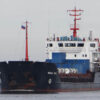
On Sunday, September 11, the Mikhail Dudin arrives in the port of Rotterdam; a ship carrying Russian uranium. There it will be
transferred to trucks that will then ansport it across the Netherlands on Monday to Lingen, Germany, where the uranium will be
processed into fuel rods. This was announced this morning by the Russian Ecodefense, Buendnis AgieL from Germany and Laka in a
joint press release. A few weeks ago, it was already known that a transit license had been issued by the Dutch regulator ANVS
for the transport of Russian uranium through the Netherlands. As far as is known, this will be the first transport of Russian
uranium in the Netherlands and Germany after the Russian invasion of Ukraine.
Read more
Nederlandse versie
On Sunday, September 11, the Mikhail Dudin arrives in the port of Rotterdam; a ship carrying Russian uranium. There it will be
transferred to trucks that will then ansport it across the Netherlands on Monday to Lingen, Germany, where the uranium will be
processed into fuel rods. This was announced this morning by the Russian Ecodefense, Buendnis AgieL from Germany and Laka in a
joint press release. A few weeks ago, it was already known that a transit license had been issued by the Dutch regulator ANVS
for the transport of Russian uranium through the Netherlands. As far as is known, this will be the first transport of Russian
uranium in the Netherlands and Germany after the Russian invasion of Ukraine.
Read more
September 5, 2022
So how flexible is nuclear power in France now really?
 Nederlandse versie
Laka sometimes gets the question that if nuclear power plants in France can be used flexibly, can nuclear power not be used as a
intermittent source of electricity, complementing wind and solar?
The short answer then is, that if nuclear power plants can be used flexibly, it does not mean that in France nuclear power
plants will come to the rescue as soon as the sun sets. Coincidentally, Dutch nuclear energy research center NRG recently
reported that they are investigating precisely this for French EDF: How to make nuclear fuel more resistant to "transients"
(changes in reactor power), because, according to experts at NRG: "At the moment, [French] nuclear power plants are designed
to operate at a constant power: it's on or off."
Read more
Nederlandse versie
Laka sometimes gets the question that if nuclear power plants in France can be used flexibly, can nuclear power not be used as a
intermittent source of electricity, complementing wind and solar?
The short answer then is, that if nuclear power plants can be used flexibly, it does not mean that in France nuclear power
plants will come to the rescue as soon as the sun sets. Coincidentally, Dutch nuclear energy research center NRG recently
reported that they are investigating precisely this for French EDF: How to make nuclear fuel more resistant to "transients"
(changes in reactor power), because, according to experts at NRG: "At the moment, [French] nuclear power plants are designed
to operate at a constant power: it's on or off."
Read more
December 3, 2021
Online: 5000 posters from the international anti-nuclear movement
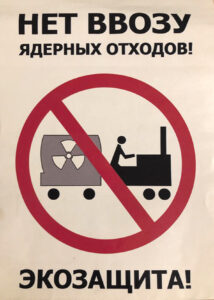 Laka launches a database with almost 5000 posters from the worldwide anti-nuclear movement. The database is part of Laka's 'special collections' - the fighting culture of the international anti-nuclear movement - which also includes music and graphic novels. Apart from campaigning against the pro-nuclear revival in the Netherlands, Laka has an important function as treasurer of the cultural heritage of the anti-nuclear movement: in the Netherlands but also internationally.
Laka has a large collection of posters itself, but has expanded the collection for this database over the years with images of posters received from other organizations or to be found on the internet. All these almost 5000 posters exist not only as digital files but also on paper: that is one of the conditions to be included in this collection. Another condition is that the size must be larger than 21x30cm (A4) to be considered a poster. On this poster page there is also attention for other online collections of posters from other social movements, an overview of poster books, and more.
These 5,000 (orso) posters are undoubtedly only a small part of the posters that have been made worldwide against nuclear power plants, uranium mining, radioactive waste, etc.. But it is already a very nice collection that also gives an idea of the global struggle. Although the vast majority of the posters come from Western Europe and North America, there are hundreds from other countries; and that while printing posters is much more difficult in countries where the anti-nuclear movement suffers from a lack of infrastructure and financial resources, and often from greater repression.
Laka's online poster collection is a work in progress. And will remain so. We would like to expand it with more and more posters: contribute by sending in your posters or images of posters (contact us at info@laka.org). We also want to add more and more information about for example the campaign of which the poster is part of, or the action or activity the poster refers to.
Almost every digital image has been edited: after all, it is not about showing the state of the posters in our collection, but about showing the poster in all its glory. Therefore holes, tears and tape residue have been digitally removed and faded colours restored.
The link to the online poster collection
Link to antinuclear music from the Netherlands
Link to antinuclear music from other countries
Link to Laka's collection of comicbooks.
April 12, 2021
European Commission launched a state aid probe into financing of Dutch nuclear waste after complaints by PV-owners

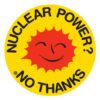 Summer 2017, owners of PV-cells, together with Laka, lodged a European State aid complaint against the Borssele nuclear power plant.
Sustainable energy producers complained that there is a distortion of the internal energy market as the Dutch state shoulders nuclear
waste company COVRA from liabilities associated with the long term interim storage of nuclear waste. As a result, the Dutch State
shields EPZ, the operator of the Borssele nuclear power plant from costs for its nuclear waste. This results in producers of renewable
energy having a a competitive disadvantage over nuclear power.
Summer 2017, owners of PV-cells, together with Laka, lodged a European State aid complaint against the Borssele nuclear power plant.
Sustainable energy producers complained that there is a distortion of the internal energy market as the Dutch state shoulders nuclear
waste company COVRA from liabilities associated with the long term interim storage of nuclear waste. As a result, the Dutch State
shields EPZ, the operator of the Borssele nuclear power plant from costs for its nuclear waste. This results in producers of renewable
energy having a a competitive disadvantage over nuclear power.
» Read more about our collective state aid complaint
For a long time, we didnt receive a European response to our complaint, until recently, when we reviewed some documents
which Laka obtained through a FOI-request on the financing of the COVRA nuclear waste company. The released documents showed
that after the complaint, the EC launched an in depth inquiry into the financing of nuclear waste in the Netherlands. As of today, the Dutch
government never publicly commented on the European probe.
Only a few days ago, through a reliable source, we also heard that in september 2020 the EC subsequently dropped its
inquiry. We do not know why » read more in Dutch.
After a recent conclusion by the Aarhus Compliance
Committee, environmental NGOs must get legal standing in EC state aid procedures. So next time, organisations such as Laka can ask
the European Court to intervene.
September 1, 2020
New brochure focusing on the uranium enrichment consortium Urenco
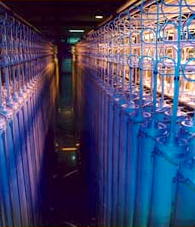 The Treaty of Almelo was signed on 4 March 1970 - an agreement between the Netherlands, the United Kingdom and West Germany on
setting up a company with the aim of enriching uranium: Urenco. The origin of uranium enrichment is military and until then enrichment
was primarily the monopoly of the United States and Soviet nuclear-weapon states.
Now, 50 years later, Urenco is a major player on the world market. But those 50 years did not go smoothly and even now the company is
under pressure: not only because of the slowdown in the growth of nuclear energy, resulting in large overcapacity in the enrichment
market and a shrinking order portfolio, but also due to the German Atom Ausstieg and the decline of nuclear energy in Urenco’s
traditional market: Western Europe. This paper describes the development of uranium enrichment and the turbulent history of Urenco.
It further analyzes current issues regarding Urenco and its uncertain future.
This is the English version of the original
report in Dutch written by Dirk Bannink, plus a more detailed discussion of the A.Q. Khan network (with thanks to David Lowry for
his help with this section). The report is part of the ‘50 Years Treaty of Almelo’ project - a collaboration between Vedan Foundation,
Enschede for Peace (NL), AKU Gronau, AKU Schuettorf, BBU (BRD), Close Capenhurst Campaign (UK) and the Laka Foundation.
Read it here
The Treaty of Almelo was signed on 4 March 1970 - an agreement between the Netherlands, the United Kingdom and West Germany on
setting up a company with the aim of enriching uranium: Urenco. The origin of uranium enrichment is military and until then enrichment
was primarily the monopoly of the United States and Soviet nuclear-weapon states.
Now, 50 years later, Urenco is a major player on the world market. But those 50 years did not go smoothly and even now the company is
under pressure: not only because of the slowdown in the growth of nuclear energy, resulting in large overcapacity in the enrichment
market and a shrinking order portfolio, but also due to the German Atom Ausstieg and the decline of nuclear energy in Urenco’s
traditional market: Western Europe. This paper describes the development of uranium enrichment and the turbulent history of Urenco.
It further analyzes current issues regarding Urenco and its uncertain future.
This is the English version of the original
report in Dutch written by Dirk Bannink, plus a more detailed discussion of the A.Q. Khan network (with thanks to David Lowry for
his help with this section). The report is part of the ‘50 Years Treaty of Almelo’ project - a collaboration between Vedan Foundation,
Enschede for Peace (NL), AKU Gronau, AKU Schuettorf, BBU (BRD), Close Capenhurst Campaign (UK) and the Laka Foundation.
Read it here
January 24th, 2020
Despite ‘termination’ NRG confirms: Still weapons-grade uranium in Dutch nuclear reactor
 Despite
its triumphant press release of the contrary, two years ago, NRG, the operator of the High Flux Reactor in the Netherlands, this week
confirmed Laka’s suspicion that NRG is still using weapons-grade highly enriched uranium in its reactor. Therefore, the Netherlands is
currently in breach of its agreement with Obama, reached at the Nuclear Security Summit in the Hague in 2014, to cease the use of
weapons-prone highly enriched uranium for civil, medical use.
Read more Despite
its triumphant press release of the contrary, two years ago, NRG, the operator of the High Flux Reactor in the Netherlands, this week
confirmed Laka’s suspicion that NRG is still using weapons-grade highly enriched uranium in its reactor. Therefore, the Netherlands is
currently in breach of its agreement with Obama, reached at the Nuclear Security Summit in the Hague in 2014, to cease the use of
weapons-prone highly enriched uranium for civil, medical use.
Read more
December 1, 2018
Asterix und das Atomkraftwerk
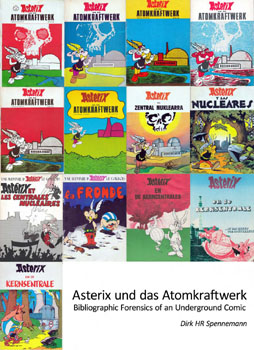 Exactly fourty years after its 'birth' Asterix und das Atomkraftwerk is honoured with a poster-exhibition in Austria.
Asterix und das Atomkraftwerk was first created in Vienna in 1978 by cutting up existing Asterix comic books, rearranging selected
panels and adding a new narrative into the speech bubbles. The story of the successful resistance of the Gaulish village that was declared
a site for a nuclear power plant resonated with the anti-nuclear movement. Pirated copies were circulated in various German towns even
before the first German edition was stopped through legal action by the copyright owners of the Asterix brand.
The volume was translated and adapted to Dutch, French and various dialects Spanish, incl. Basque.
Exactly fourty years after its 'birth' Asterix und das Atomkraftwerk is honoured with a poster-exhibition in Austria.
Asterix und das Atomkraftwerk was first created in Vienna in 1978 by cutting up existing Asterix comic books, rearranging selected
panels and adding a new narrative into the speech bubbles. The story of the successful resistance of the Gaulish village that was declared
a site for a nuclear power plant resonated with the anti-nuclear movement. Pirated copies were circulated in various German towns even
before the first German edition was stopped through legal action by the copyright owners of the Asterix brand.
The volume was translated and adapted to Dutch, French and various dialects Spanish, incl. Basque.
The PLAGE exhibition
(in German) is based on the Laka publication Asterix und das Atomkraftwerk.
Bibliographic Forensics of a German Underground Comic, researched by D. HR. Spennemann. Laka has one of the world largest collections of
original material of the pirated comic in all languages, which was used for compiling the exhibition.
March 1, 2018
Anti-nuclear magazines
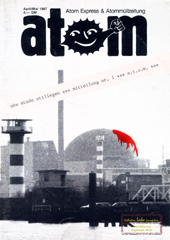 A trove of magazines from the Dutch anti-nuclear movement has been digitized by Laka. Many hundreds of issues are available online.
Laka is now working on digitising its collection of anti-nuclear magazines from countries other than The Netherlands (Germany, UK,
USA, etc.). [Start here to discover this part of the library.
A trove of magazines from the Dutch anti-nuclear movement has been digitized by Laka. Many hundreds of issues are available online.
Laka is now working on digitising its collection of anti-nuclear magazines from countries other than The Netherlands (Germany, UK,
USA, etc.). [Start here to discover this part of the library.
Dataset of magazines
Before digitizing articles was possible or doable, Laka entered crucial information of articles in a database. This dataset
from the early days of the digital era, called 'Adder', has been rescued and contains around 40.000 articles from the Netherlands and
abroad. It is easy to search as it has been categorised in over two thousand tags. Some of the articles in Adder have a direct link to
their online issue. If not, you're welcome to request a scan or copy by e-mail.
June 1, 2017
Laka releases IAEA-list with (near) accidents in nuclear power stations
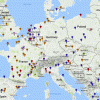 Today, the Laka-foundation
released a list with reports from almost 1,000 incidents and (near) accidents with nuclear power plants and other nuclear facilities. Since
1990 the International Atomic Energy Agency IAEA has gathered these reports but publishes only the reports of the last twelve months. The
full list of reports gives neighbors, NGO's and journalists a better insight into how often and how grave there have been serious mishaps at nuclear facilities around the world.
Accidents and technical and human errors are reported by national nuclear regulatory agencies to the International Atomic Energy Agency IAEA.
The IAEA collects the incident reports in order to warn other nuclear operators for possible routes of failure. The IAEA's aim is that by doing
so, similar accidents at nuclear power plants, reprocessing plants, fuel enrichment plants, nuclear laboratories, irradiation facilities and
with radioactive transports, can be prevented. [read more] Today, the Laka-foundation
released a list with reports from almost 1,000 incidents and (near) accidents with nuclear power plants and other nuclear facilities. Since
1990 the International Atomic Energy Agency IAEA has gathered these reports but publishes only the reports of the last twelve months. The
full list of reports gives neighbors, NGO's and journalists a better insight into how often and how grave there have been serious mishaps at nuclear facilities around the world.
Accidents and technical and human errors are reported by national nuclear regulatory agencies to the International Atomic Energy Agency IAEA.
The IAEA collects the incident reports in order to warn other nuclear operators for possible routes of failure. The IAEA's aim is that by doing
so, similar accidents at nuclear power plants, reprocessing plants, fuel enrichment plants, nuclear laboratories, irradiation facilities and
with radioactive transports, can be prevented. [read more]
April 2017
Nuclear reactors and the fading business case of medical isotope irradiation
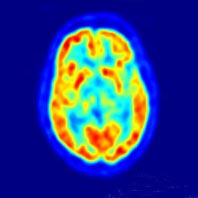 As you might know,
nuclear rectors are also being used in the production chain of isotopes. In the Netherlands, there is currently a plan to build a new
research reactor, Pallas, as the successor of the EC-owned High Flux Reactor in Petten. We see there is a strong tie between the community
operating a reactor for isotope production, and continuing R&D on nuclear power in general. Also isotope-production with particle
accelerators has a few essential advantages, notable less or no long lived waste, no need for fission products and a decentralization of
production. As you might know,
nuclear rectors are also being used in the production chain of isotopes. In the Netherlands, there is currently a plan to build a new
research reactor, Pallas, as the successor of the EC-owned High Flux Reactor in Petten. We see there is a strong tie between the community
operating a reactor for isotope production, and continuing R&D on nuclear power in general. Also isotope-production with particle
accelerators has a few essential advantages, notable less or no long lived waste, no need for fission products and a decentralization of
production.
Laka has been conducting a strong campaign against the plans, focusing on
new means of irradiating/producing medical isotopes, mostly with accelerators.
The operator of the HFR, ECN/NRG, is also in charge of a cleanup operation for legacy nuclear waste at their site. As they claimed that
they couldn't shoulder the financial burden for the legacy waste they threatened with filing a bankrupt which would also stop the production
of isotopes. So in October ECN/NRG got a quick €40 million subsidy from the national government, to continue with waste processing and with
the irradiation activities for isotope production.
In February, Laka made a transparency request on the documentation of ECN/NRG on which the government decided to grant this subsidy.
These documents have now been (partially) released. As the assessment
by Strategy&/PWC of the financial forecast for ECN/NRG is in English and also might have implications on other sites where medical isotopes
are being produced (notably IRE/BR-2 in Belgium, the Maria reactor in Poland, and also more overseas) it might be interesting.
For us the most interesting is of course the documented increased capacity - in the operators own writing! - which is outpacing the slowly
increasing demand. This outs the necessity of a new reactor in Petten in a pale light. Read our news item on it
at (in Dutch).
We welcome feedback on this issue
October 30, 2015
Court case against the expansion of COVRA nuclear waste storage
Using Euratom to open the debate on nuclear waste storage
 In 2011 the Dutch government granted life time
extension to Borssele, the only Dutch nuclear power plant. Where it was initially
supposed to be closed in 2003, the closure was postponed till 2013 and its now set to 2034. Therefore, the plant will be kept on-line
for 60 years. In 2011 the Dutch government granted life time
extension to Borssele, the only Dutch nuclear power plant. Where it was initially
supposed to be closed in 2003, the closure was postponed till 2013 and its now set to 2034. Therefore, the plant will be kept on-line
for 60 years.
Borssele's life extension means it will produce more nuclear waste then was initially foreseen, and this is why the Dutch government
also granted an expansion of the COVRA intermediate nuclear waste storage early 2015.
Laka Foundation appealed the expansion of the COVRA nuclear waste storage in February 2015. One of the objections of Laka c.s. is that
the (interim) storage of nuclear waste at Covra is expanded without there being a plan what to do with the nuclear waste after closure of
the Covra. There is a national fund which should collect enough interest to finance eventual construction of a final repository around 2100
and there's a tentative research program which is planned to last until 2100. And that's it.
read more
October 27, 2015
Local Dutch government says "no" to Pallas-reactor
 Last weekend, Dutch radio [pressrelease,
in Dutch] revealed a local government decision to stop financing the preparatory phase for Pallas, a proposed
research reactor for medical isotopes[1]. The secret decision is reportedly based on the weak business case which NRG, the initiator
of the new-build project, submitted to the province of Noord-Holland. The members of the local government body are said to have had
little confidence in the business case or the ability of NRG to attract private finance for the Pallas-reactor project
(estimated cost: EUR 600m).
Last weekend, Dutch radio [pressrelease,
in Dutch] revealed a local government decision to stop financing the preparatory phase for Pallas, a proposed
research reactor for medical isotopes[1]. The secret decision is reportedly based on the weak business case which NRG, the initiator
of the new-build project, submitted to the province of Noord-Holland. The members of the local government body are said to have had
little confidence in the business case or the ability of NRG to attract private finance for the Pallas-reactor project
(estimated cost: EUR 600m).
The Province of Noord-Holland and the Dutch State were financing the the initial phase of the Pallas-reactor together on a
50/50 base. This Friday, 30 October, Dutch Minister Kamp (Economic Affairs) will discuss the arisen situation with his colleagues at
the Province in Haarlem.
The financial outlook for the proposed Pallas-reactor is dim because the market for medical isotopes is rapidly changing;
Cyclotrons, cheaper and more environmental friendly means of producing medical isotopes, are quickly emerging.
This is the second time a preparatory phase of the Pallas-reactor is abandoned; In 2010 a tender for the reactor was withdrawn
due to a lack of investors.
September 2015
Asterix und das Atomkraftwerk
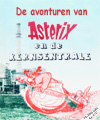 Asterix und das Atomkraftwerk was first created in Austria in 1978 by cutting up existing Asterix comic books, rearranging
selected panels and adding a new narrative into the speech bubbles. The story of the successful resistance of the Gaulish village
that was declared a site for a nuclear power plant resonated with the anti-nuclear movement. Pirated copies were circulation in
various German towns even before the first German edition was stopped through legal action by the copyright owners of the Asterix
brand. Well over 20 German-language print versions have been identified. The volume was translated and adapted to Dutch, French
and various dialects Spanish, incl. Basque. Laka Foundation publishes two studies and compiled an exhibition on the comic.
Asterix und das Atomkraftwerk was first created in Austria in 1978 by cutting up existing Asterix comic books, rearranging
selected panels and adding a new narrative into the speech bubbles. The story of the successful resistance of the Gaulish village
that was declared a site for a nuclear power plant resonated with the anti-nuclear movement. Pirated copies were circulation in
various German towns even before the first German edition was stopped through legal action by the copyright owners of the Asterix
brand. Well over 20 German-language print versions have been identified. The volume was translated and adapted to Dutch, French
and various dialects Spanish, incl. Basque. Laka Foundation publishes two studies and compiled an exhibition on the comic.
The exhibition can be seen from 1-30 September
at the International Institute for Social History (IISH) in Amsterdam.
The first publication is a 92-page study from Dirk HR Spennemann: Asterix und das Atomkraftwerk. Bibliographic Forensics of a
German Underground Comic. The report is available only digital for a small fee: Euro 5,00. Please contact Laka
by mail for details.
The second publication is a detailed description of the history of the Dutch edition of the comic: De Avonturen van
Asterix en de kerncentrale (The Adventures of Asterix and the nuclear power station). The Dutch report is available for 5,00 euro for the
digital version and 10 euro for a (full colour) hard copy. Please contact Laka by mail for details
Click here for more information.
March 2015
New: search catalogue Laka-library
 The Laka-library consists of about 8,000 books about nuclear energy.
A new search-programme makes it much easier to find the publications you're looking for. On this page
more information on the Laka-library can be found and the catalogue can be accessed through the subject-list in a dropdown menu.
The Laka-library consists of about 8,000 books about nuclear energy.
A new search-programme makes it much easier to find the publications you're looking for. On this page
more information on the Laka-library can be found and the catalogue can be accessed through the subject-list in a dropdown menu.
You can also search the catalogue on specific terms, part of a title or authors here.
More and more of the publications are available as pdf, but still a vast majority of publications are only available on paper.
You can request a copy. This is often possible (for a small fee.)
December 2014
Speculation with uranium
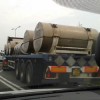 Recently, the American Senate published a report on Wall Street Bank Involvement with Physical Commodities. It turns out that Goldman Sachs investment bank speculates with 12.8m lbs (5.800 tonnes) of U3O8 and an unkown amount of UF6. The bank doesn't physically move the uranium, but acquires ownership title when uranium is stored at: Recently, the American Senate published a report on Wall Street Bank Involvement with Physical Commodities. It turns out that Goldman Sachs investment bank speculates with 12.8m lbs (5.800 tonnes) of U3O8 and an unkown amount of UF6. The bank doesn't physically move the uranium, but acquires ownership title when uranium is stored at:
U3O8 uranium products
- Comeko facility in Ontario, Canada;
- Comurhex facility in France;
- Converdyn facility in Illinois;
|
UF6 uranium products
- an Eurodif facility in France;
- Urenco facility in Germany/UK/Netherlands;
- Louisiana Energy Services facility in New Mexico;
- USEC facility in Paducah, Kentucky.
|
The Netherlands has a limited list for which purposes ionising materials can be applied. Amongst those are for example energy production and
uranium enrichment. Speculation, and storage and transport for speculation are not allowed. Recently, a permission was issued by
Dutch authorities for transporting uranium through the Netherlands to ao. Comurhex France and for UF6 to Urenco, Almelo. Laka has
appealed these permissions, as it was likely that uranium to be transported was going to be used for speculation - a non-allowed purpose.
Read more here.
June 2013
New publication: The Pallas business case - between dream and reality (in Dutch)
An assessment of the plans for a new research reactor which is said to be necessary for the production of medical isotopes. The reactor should be
privately funded (expected costs doubled to 600 million euro in a few years) and should enter operation in 2023. Laka raises serious doubts about
the business case and fears that government has to step in at a later stage to save the project with public money. The could be a choice if there
were no alternatives for the production of medical isotopes, but there is: See the May 2010 Laka report: Medical Radioisotope Production Without A Nuclear Reactor. Here you can find an English summary of the June 2013 report.
March 2012
New publication: Responses after Chernobyl and Fukushima. A comparative analyses of Germany and The Netherlands
The worldwide reactions on the nuclear disaster at Chernobyl (Ukraine, 26 April
1986) were quite different in different countries. So were the worldwide reactions on the nuclear disaster at
Fukushima (Japan, 11 March 2011). On both governmental level as well as on a public level. This article is a
comparative overview of the worldwide responses two both disasters, with (West-) Germany and the Netherlands as
amplified examples.
It is clear it will take some time to analyze the precise consequences of the Fukushima nuclear disaster
on a political level, as well as for the future of nuclear power in general. Nevertheless, this is a first
 attempt, focusing on
the differences compared to Chernobyl in two neighboring countries. attempt, focusing on
the differences compared to Chernobyl in two neighboring countries.
Read the paper (pdf)
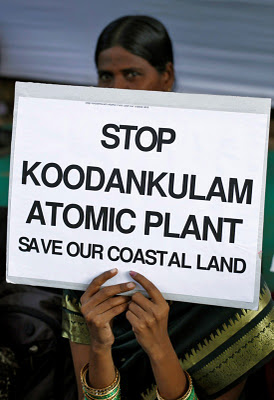
Solidarity with struggle against Koodankulam
In the most southern part of India, Tamil Nadu, the local population is fighting the largest nuclear complex
under construction in the world: Koodankulam. The state repression increased over the months and is expecting to
increase further after a large
police force is send to the village of Idinthakarai, ostensibly to ensure restart of construction.
Although the protest originates from the 1980's it intensified dramatically last year after Fukushima and the
announcement by the government that the first of six reactors would enter test-operation late 2011. Many thousands
op people took to the streets and acted continuously against Koodankulam, resulting in postponing operation of the
nuclear reactor. State repression has always been harsh, but is escalating since last year, against the non-violent
activities of the People's Movement Against Nuclear Energy (PMANE)
Read more and show your solidarity
With regurlar updates!
February 2012
Netherlands: new reactor postponed!
Not completely surprising came the announcement of Dutch utility Delta about postponing plans to build
a second nuclear power plant in the Netherlands because of the poor investment climate and low electricity prices.
Although Delta states it remains committed to the project, not many believe in its resurrection.
Delta had plans to build a nuclear power plant with a maximum capacity of 2,500 megawatts in the
Zeeland province in the southwest of the country, next to an existing plant near the town of Borssele, but said on
January 23, 2012 it was delaying these for two to three years. "The last half-year the investment climate has
worsened due to the financial crisis. In addition, overcapacity of electricity production has increased further
due to the recession," Delta said in a statement.
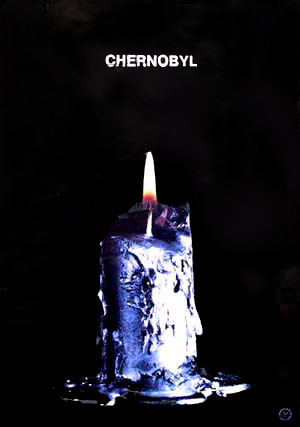
Chernobyl Chronology 1986-2011
|
In December it became clear that French EDF, the preferred partner for the project had decided not to
participate and when the newly appointed CEO of German utility RWE in a January 21, interview stated that RWE
would not invest in a second reactor in Borssele 'under current economical and political circumstances', it was
clear that Delta would postpone or cancel the whole project.
RWE owns 30 percent of the existing Borssele plant, while Delta, which is owned by Dutch municipalities and
province of Zeeland, owns the remainder. However there was no agreement on cooperation in the construction of the
second reactor. Both Delta and RWE (the Dutch subsidiary company ERH Essent) had started a procedure in the past
few years to obtain a license for a nuclear power plant.
Delta says it remains 'committed to nuclear power', and stated the decision had nothing to do with the accident
at Fukushima or dwindling support for nuclear in Zeeland province⊠The decision to put the plan on hold is based
solely on economic grounds (low energy prices, no investors) and uncertainty about carbon dioxide (CO2) prices,
spokeswoman Mirjam van Zuilen said.
On a stakeholders meeting last December, much criticism and skepticism about the project was visible for the
first time. A lot had to do with the passionate but clumsy CEO Boerma, who then left the company. Stakeholders
decided not to invest 100 million in obtaining a licence but only 10 million to increase support for the project
and come up with interested partners in the coming months.
April 2011
Radiating Posters
Posters from the global movement against nuclear power
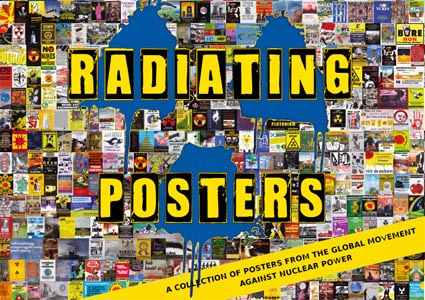
In cooperation with WISE, Laka published a beautiful book with 600 posters
against nuclear power from 45 countries. The book is a compilation of the large cultural heritage of 40 years of
global struggle against nuclear energy. Never before such a rich collection of anti-nuclear
posters was brought together, or, for that matter, of any other societal issue, of so many
countries, cultures and of such a long period.
This book truly is an homage to the richness of the cultural heritage of the antinuclear
power movement and could be a source of inspiration for anyone deciding to design a poster.
The price of the book is 20 euro plus postage. If you order 5 copies or more a
40% discount will be given.
Order your copy by sending a mail to Laka.
22 May 2010
New Laka research report: Medical Radioisotope Production Without A Nuclear Reactor
This report is answering the key question: 'Is it possible to ban the use of research reactors for the production
of medical radioisotopes?'
The answer is 'yes'.
Radioisotopes production with cyclotrons offers many advantages over a nuclear reactor: the
volume of radioactive waste produced by cyclotrons is far less and much less hazardous than
the radioactive waste of research reactors; the production is decentralized and there is no proliferation risk.
Read more and download the report.
13 February 2009
New article published: Medical Isotope Production. Conversion from HEU to LEU based production
and alternative methods
Since 1992 the US restricted its high-enriched uranium (HEU) exports to encourage other countries to
convert civilian facilities to low-enriched uranium (LEU), which can't be used directly to make nuclear
weapons. Instead in mid 2005 Congress passed the Energy Policy Act of 2005, which includes provisions
relaxing restrictions on HEU exports for medical isotope production. The primary beneficiaries of the
new law are producers of medical radioisotopes.
read more (pdf)
History of nuclear power in The Netherlands (in Dutch)

|
30 January 2009
The history of nuclear power
Laka Foundation launched a new website on the history of nuclear power in The Netherlands. It is the
result of almost 18 months research in thousands of documents available in the Laka documentationcentre,
but also in many other archives. Thanks to this project, many original documents are now available online
for the first time. For instance all government nuclear energy white papers since 1952. Even all paragraphs
on nuclear energy (related-issues) in the election-programms by the different political parties since the
early fifties.
The site (in Dutch) already turns out to be an important source for journalists, scholars and activists
to either find background information on a special issue, or as a start for historical research.
May 2008
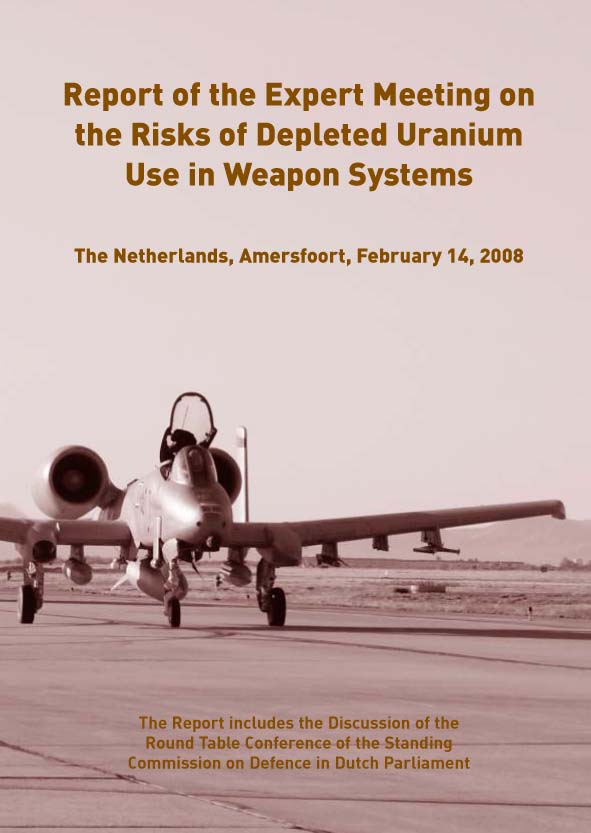
Report of the Expert Meeting on the Risks of Depleted Uranium Use in Weapon Systems
On February 14, 2008, an Expert Meeting was held on the Risks of Depleted Uranium Use in
Weapon Systems in Amersfoort, the Netherlands. The meeting was organized because of a round
 table
conference (short hearing) organized by the standing committee of Defense from the Dutch Parliament
and held the same day. Presentations were given by Henk van der Keur (Laka Foundation), John LaForge
(Nukewatch), Dr. Avril McDonald (expert on legal issues), Prof. Dr. Keith Baverstock (scientist,
former official and advisor of the WHO) and Krista van Velzen (MP of the Dutch Socialist Party). table
conference (short hearing) organized by the standing committee of Defense from the Dutch Parliament
and held the same day. Presentations were given by Henk van der Keur (Laka Foundation), John LaForge
(Nukewatch), Dr. Avril McDonald (expert on legal issues), Prof. Dr. Keith Baverstock (scientist,
former official and advisor of the WHO) and Krista van Velzen (MP of the Dutch Socialist Party).
The report (pdf, 640kb) includes the discussion of the round table conference
held in the Dutch parliament and is bilingual (partly in Dutch). It is also available on paper (52 pages). If you want
a copy please contact us.
Februari 2008
New article published: 'Thorium based nuclear power: an alternative?'
It is said that the global reserves of thorium are considerably larger than natural uranium. Therefore the
call for thorium-based nuclear energy is rising. In the past 50 years basic research and development on the
use of thorium-based fuel cycles has been conducted in Germany, India, Japan, Russia, the UK and the USA.
Test reactor irradiation of thorium fuel to high burn-ups has also been conducted and several test reactors
have either been partially or completely loaded with thorium-based fuel. But is it really an alternative?
read more (pdf)
November 2007
New article published: 'In time of hype, telling the thruth becomes a revolutionary act'
The war of words over Iran's nuclear ambitions has escalated recently, with the French Foreign Minister
Bernard Kouchner warning the world to "prepare for the worst, and the worst is war" (although later withdrawn)
and especially a spate of articles in the US print media targeting ElBaradei and the IAEA after agreeing on
a time-schedule with Iran to answer outstanding questions about Iran's nuclear program.
This article examines the latest developments and analyses the role of the IAEA and ElBaradei
read more (pdf)
July 14, 2007
New article published: Emerging Nuclear States.
Thailand is one of many countries announcing to go 'the nuclear path'. It almost seems
that every selfrespected government announces such plans, even unlikely candidates as
Nigeria or Morocco or Myanmar. It's very unlikely that even a majority of those plans
will materialise for many reasons. Not the least important reason is that it is obviously
harder to built a countries' first as the second or third nuclear power plant....
read more (pdf)
March 20, 2007
New publication: Monopolizing the fuel supply: The GNEP, GNPI and Fuel Bank initiatives
One of the most urgent problems the nuclear community has to 'solve' before a relapse of nuclear
energy is possible is the proliferation issue. Nuclear energy makes the nuclear bomb possible in
many ways: know-how and skills, materials, technologies, processes and methods. The difference lies
only in the intention.
One of the ways the nuclear society wants to 'solve' this is to monopolize the nuclear
infrastructure and technology and restrict access to nuclear fuel. Internationally several initiatives
are currently being developed.
But all these initiatives are undermining Article IV of the Non proliferation Treaty-- and with
that the entire NPT, because Article IV is the 'carrot' in the NPT-'stick'.
Even if proposals to limit the accessibility of technology and nuclear fuel could somehow be
brought into force, it would still not result in eliminating the proliferation risks associated with
a (foreseen) large expansion of nuclear power.
read more (pdf)
|
