
Publicatie Laka-bibliotheek:
Here be no dragons (1987)
| Auteur | SSEB |
| Datum | 1987 |
| Classificatie | 2.05.9.90/07 (GROOT-BRITTANNIË - REST INSTALLATIES) |
| Voorkant | 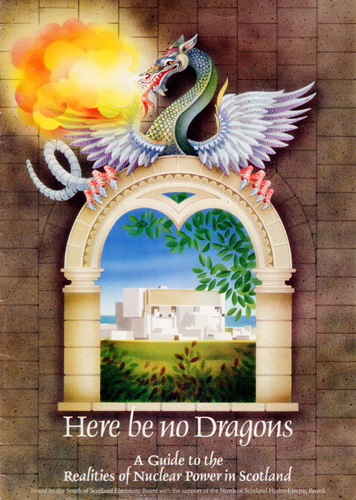 |
Uit de publicatie:
Did you know?

1 Fifty per cent of Scotland's electricity is already nuclear and this will rise to 60
per cent when Torness is fully operational. Ten per cent of the electricity comes from
hydro and the remainder from coal, used to meet the heavier loads during daytime.
Other fuels are some 25 per cent dearer than nuclear power for generating base load
electricity.

2 Electricity tariffs throughout Scotland would need to be increased by 10 per cent
if Torness were not brought into service.

3 Electricity is the largest single supplier of useful energy in Scotland. Without
nuclear power, it cannot be produced at the prices required to let Scotland's
industries grow and prosper.

4 Nuclear reactors have been generating electricity for Scottish homes for over a
quarter of a century, and there are now over 600 reactor years of experience in
operating nuclear power in the UK.

5 Nuclear power is the safest energy source of all time. No-one has ever been killed
as a result of a nuclear accident at a power station in the UK and no operator or
member of the public has ever received a dangerous dose of radiation.

6 Radiation is all around and within us from natural sources. Nuclear power adds
less than 0.1 per cent of the average dose we receive naturally -far less than living
in parts of the country which have naturally high levels such as Aberdeen or Cornwall.

7 The accident at Chernobyl was about the worst accident possible with a reactor.
In Scotland it will produce an extra dose of radiation equivalent to having three
two-week holidays in Cornwall during your lifetime.

8 The design of SSEB reactors as at Torness is such that it is physically impossible
for a Chernobyl-type accident or anything like it to occur with them.

9 If some common foodstuffs, or ash from coal burning, and many other everyday
substances, were subject to the same radiation regulations as materials on nuclear
power stations, they would have to be classified as low level waste and subject to
tight controls on disposal.

10 The intermediate level radioactive wastes from one person's lifetime use of
nuclear electricity would hardly fill a one gallon can. The equivalent high level
wastes are about the size of a tennis ball. The techniques for their safe disposal
are available now, and this has been confirmed by the National Radiological Protection
Board.
Deze publicatie is alleen op papier bij Laka beschikbaar, niet als pdf.
Publicaties zijn te leen of informeer of we een kopie kunnen maken. Soms, als we tijd hebben, lukt dat tegen kostprijs van de kopieën.