
Publicatie Laka-bibliotheek:
Nuclear Ireland? (1978)
| Auteur | M.Hussey, C.Craig |
| Datum | 1978 |
| Classificatie | 2.06.0.00/01 (IERLAND) |
| Voorkant | 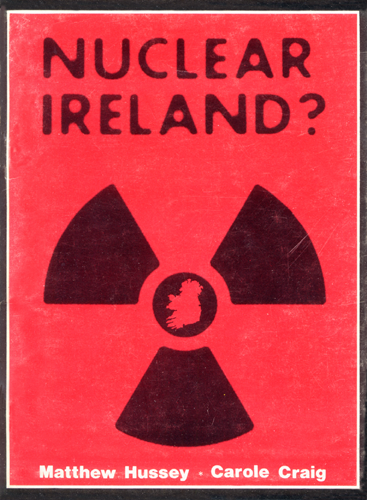 |
Uit de publicatie:
INTRODUCTION

With the announcement of the government's plan to build a nuclear power station
at Carnsore Point in County Wexford, Ireland has been launched full tilt into the
centre of the nuclear controversy.
According to the government's Green Paper on Energy, Ireland is an "energy
deficient" country, importing 80% of the energy it uses. Seventy five per cent of
this is oil, a fuel subject to unpredictable price rises and political embargos.
To remedy the situation, the present government recommends the development of
an energy programme based on the use of other energy sources, electricity
generated by nuclear power coming at the top of the list.
The nuclear option is now being debated world wide. Britain, Spain, France,
Germany, the Netherlands, Sweden-where a national election was fought on the
issue-Japan and the USA all have nuclear power stations and growing antinuclear
movements.
Without nuclear power, say its defenders, we shall all end starving, freezing and
fighting in the dark. With it, say the opponents, pointing to the alternatives, we
will endanger ourselves and the environment for longer than the recorded history
of humankind.
In Ireland, as in all countries involved in the nuclear controversy, the debate is not
just about one form of energy rather than another, but about the future of Irish
society.Nuclear power represents a path of energy development-and therefore
economic development-which requires large capital investment, centralization,
and careful government regulation.
The alternatives-conservation and the use of renewable resources (biomass, sun,
waves, wind)-would employ people rather than vast amounts of capital, tend
toward decentralization (such as solar heating of homes), and require little
government intervention.
Deze publicatie is alleen op papier bij Laka beschikbaar, niet als pdf.
Publicaties zijn te leen of informeer of we een kopie kunnen maken. Soms, als we tijd hebben, lukt dat tegen kostprijs van de kopieën.